Mohit Kumar.

Technical Support Specialist with a Computer Science degree. I bridge engineering and customer impact—debugging APIs, tracing integrations, reproducing issues, and building tools that make systems reliable. Moving toward Technical Support Engineer and junior software engineering roles.

How I work

I work alongside engineering teams to resolve complex, customer-impacting problems: API and webhook failures, third-party integrations, DNS and email authentication (SPF, DKIM, DMARC), and escalations that need clear, reproducible evidence.

My background is technical support with a CS foundation—comfortable reading logs, testing hypotheses, and communicating trade-offs to both engineers and customers. Outside tickets, I build full-stack applications, ML projects, and automation to sharpen my engineering craft.

Stack & domains

Languages

  • JavaScript
  • TypeScript
  • Python
  • HTML5 / CSS3

Frameworks & libraries

  • React
  • Next.js
  • Node.js
  • Tailwind CSS

APIs & integrations

  • REST APIs / webhooks
  • OAuth 2.0
  • Postman
  • DNS / SPF / DKIM / DMARC

Data & ML

  • Scikit-learn
  • Pandas
  • Streamlit

Tools & workflow

  • Git
  • Issue reproduction
  • Technical writing & escalations

Professional background

Technical Support Specialist

SaaS · Present

  • Own technical troubleshooting and escalation triage for customer-facing issues—translating symptoms into actionable next steps.
  • Debug API requests, webhook payloads, and third-party integration failures across environments.
  • Investigate DNS and email authentication problems (SPF, DKIM, DMARC) and document resolutions for customers and internal teams.
  • Reproduce customer-reported bugs, capture repro steps, and hand off clear packages to engineering.
  • Partner with engineering and product on cross-functional resolution, communication, and follow-through until closure.

Projects

NBA All-Star Predictor

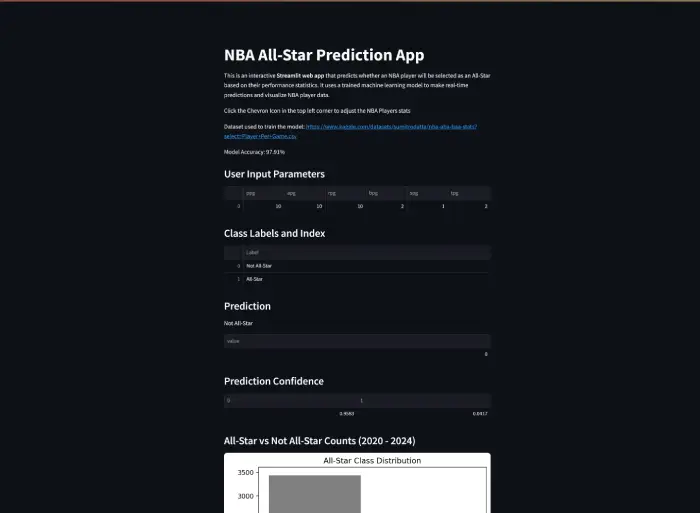
Problem: All-Star selection is high-stakes and opaque; stakeholders need a data-driven view of who is likely to make the cut. Approach: Built an ML classifier on historical player stats with feature engineering and model comparison in Scikit-learn, shipped as an interactive Streamlit app for exploration. Impact: Demonstrates end-to-end data science: wrangling, evaluation, and a deployable surface for non-technical users.

Python

Scikit-learn

Streamlit

Pandas

Ride1Up e-commerce experience

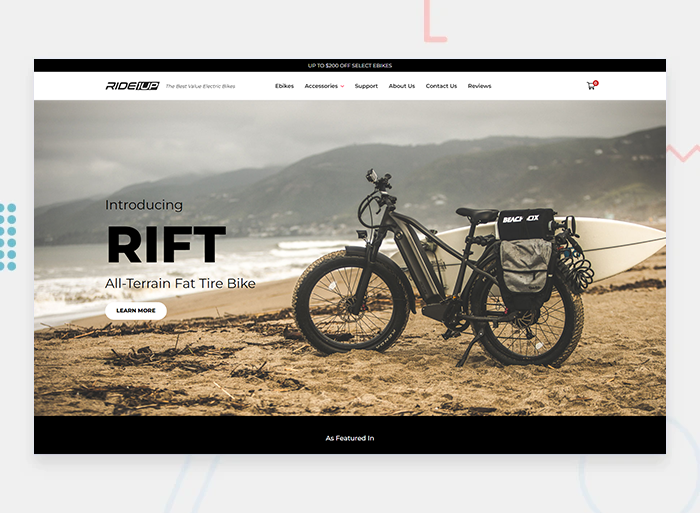
Problem: Real storefronts require coherent routing, state, and presentation across many product flows. Approach: Cloned a production-style bike e-commerce UX with React Router and Redux for predictable global state, and CSS Modules for maintainable styling boundaries. Impact: Shows how I structure larger frontends—not just pages—so features can evolve without tangling concerns.

React

Redux

React Router

CSS Modules

Dictionary web app

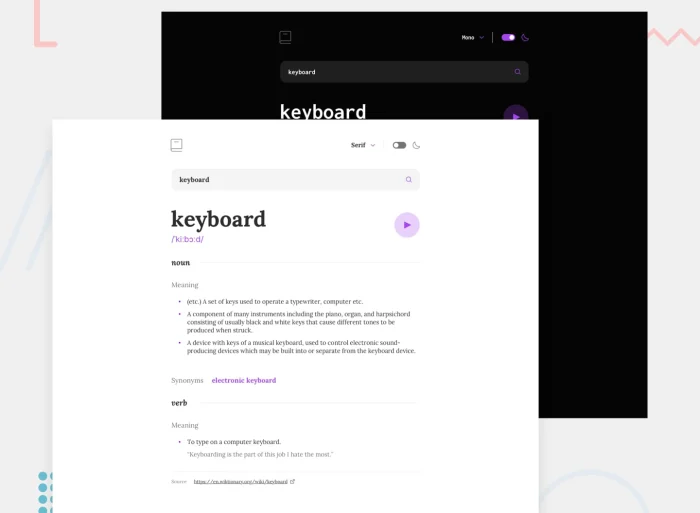
Problem: Users need fast definitions, phonetics, and related word context from a single search. Approach: Consumed a dictionary REST API in React with thoughtful loading and empty states, plus responsive typography for readability across breakpoints. Impact: Highlights API integration patterns I use in real investigations: validate inputs, handle errors, and surface clear outcomes.

React

REST API

CSS

Todo app

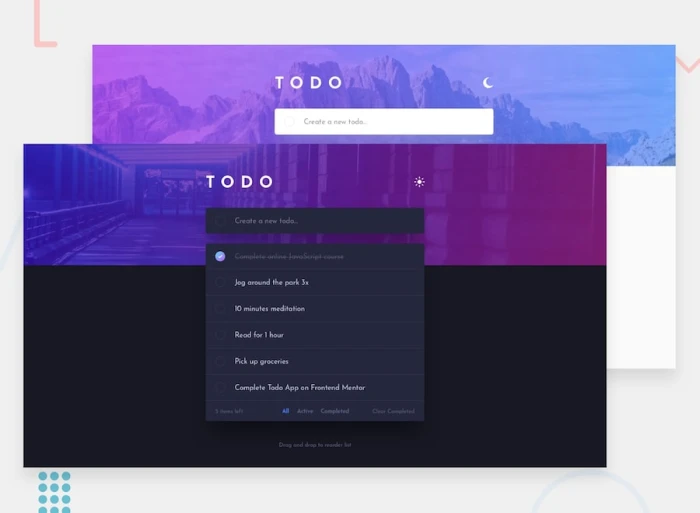
Problem: Task lists must stay predictable as users add, filter, and reorder items. Approach: Centralized state with Redux and polished motion with Framer Motion—animations reinforce state changes instead of distracting from them. Impact: A compact example of state architecture plus UX details that improve perceived quality and clarity.

React

Redux

Framer Motion